Genealogy Research
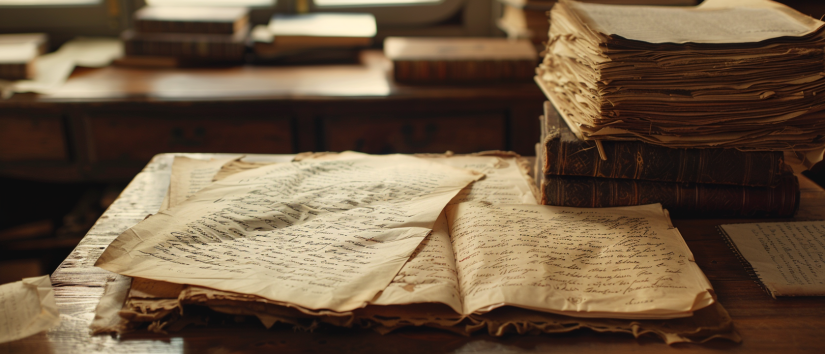
Czech Genealogy Research in the Czech Republic
Professional archival research, record analysis, and clear English reporting — worldwide, fully online.
What Genealogy Research Means — In Practice
Czexpat provides professional Czech genealogy research for clients worldwide — especially American families tracing Bohemian or Moravian roots. We work with Czech archival sources and historical records, then translate complex findings into a clear, documented report you can actually use.
Our Research Process
- Initial consultation — what you know, what you need, and what’s realistic.
- Source discovery — identify the right parish, archive, and time period.
- Record research — parish registers, land records, contextual documents.
- Transcription & translation — Latin/German/Kurrent into English.
- Deliverables — structured report + scans + sources + next steps.
What We Research
- Birth, marriage, and death records
- Parish registers (Latin / German / Kurrent)
- Land records and property references
- Census-type documents (where available)
- Military / migration clues (when relevant)
- Local context: parish boundaries, village history, surname origins
What You Receive
- High-quality record scans (when available)
- Full transcriptions and English translations
- Clear narrative summary (plain English)
- Source citations and archive references
- A structured research report + recommended next steps
- Optional: family tree build-out (depending on scope)
Pricing (Transparent, Quoted in Advance)
Research is priced in blocks based on complexity and time required. After the initial consultation, we provide a clear quote before any work begins.
Typical projects start from €300 per research block. (Adjust as you like.)
Frequently Asked Questions
The more information you already have, the easier it is to begin your family history research. Ideally, you should know the name of your ancestor, an approximate date of birth, marriage or death, and the village or town where they lived.
However, don’t worry if your information is incomplete. Even small details such as a family surname, an immigration record, an old photograph or a family story can provide valuable starting points. Every project begins by evaluating the available information and determining the most effective research strategy.
Yes, although the amount of information available will influence the research process.
In many cases, a single name combined with an approximate date, place of birth or country of emigration is enough to begin. Additional records may gradually reveal family relationships, places of residence and earlier generations.
If very little information is available, the first stage of the project focuses on identifying the correct individual before continuing with traditional genealogy research.
Not at all.
All communication, research summaries and reports are provided in English. I work directly with Czech historical records and archives, so you don’t need any knowledge of the Czech language or archival system.
Throughout the project, I’ll explain the findings in a clear and understandable way.
Absolutely.
Large parts of today’s Czech Republic were historically inhabited by German-speaking communities. Depending on the region and the time period, records may be written in German, Czech or Latin.
I regularly research German-speaking families from Bohemia, Moravia and the former Sudetenland using parish registers, archives and historical records.
Yes—but mainly from a historical perspective.
Before 1918, the Czech lands formed part of the Austro-Hungarian Empire. As a result, many historical records were created during that period and may be written in German or Latin rather than Czech.
Understanding the historical administrative structure helps identify the correct archives and records for your family.
In many cases, yes.
Czech parish records usually include house numbers, making it possible to identify the exact property where a family lived. By combining parish registers with cadastral maps, land records and other historical sources, it is often possible to reconstruct the history of an ancestral home and determine whether the building still exists today.
Most Czech parish registers date back to the 17th century, with many beginning during the 1600s. In some regions, surviving records extend into the late 1500s.
Earlier research is sometimes possible using land registers, tax records and other historical documents, although detailed family histories before parish registers generally exist only for noble or otherwise prominent families.
The Czech Republic has a well-organised archival system consisting of regional archives, district archives, the National Archives, municipal archives, church archives and several specialised institutions.
Depending on your project, research may also involve the Security Services Archive (ABS), museum collections or land registry records. Every project is different, and the appropriate archive depends on the time period and locality being researched.
Many do.
A large proportion of Czech parish registers have been digitised and are freely available online through regional archives. However, not all records have been digitised, and some collections remain accessible only through personal archive visits.
Additional sources such as land registers, municipal records and specialised archival collections are often available only in physical archives.
Yes.
Historical records are commonly written in old Czech, German or Latin using scripts such as Kurrent and Schwabacher. I also work with records written in Cyrillic, the Greek alphabet and Hebrew where relevant to a project.
Reading historical handwriting is an essential part of genealogy research and often makes the difference between finding valuable information and overlooking important details.
Yes.
Jewish genealogy often requires different sources than traditional parish research, including Jewish registers, community records, cemetery records and specialised archival collections.
Each project is unique, and the available records depend on the locality, historical period and preservation of the archives.
Absolutely.
I regularly research families from the former Sudetenland using German-language parish registers, historical maps and regional archives. Research often involves working with historical place names as well as their modern Czech equivalents.
Many descendants of Sudeten German families are surprised by how many historical records have survived and what can still be discovered today.
Yes.
Depending on the historical period, military records can provide valuable information about an ancestor’s military service, residence, occupation and family circumstances.
The availability of records varies according to the period and the archive responsible for preserving them.
Yes.
House history research combines parish registers, land registers, cadastral records, historical maps and other archival sources to trace the ownership and development of a property over time.
This type of research is particularly popular among clients wishing to learn more about their ancestral home or prepare for a heritage tour.
In many cases, yes.
Because Czech parish registers usually record house numbers, it is often possible to identify the exact property where your ancestors lived. Historical maps and cadastral records can then be compared with present-day maps to determine whether the building still exists.
This is one of the most rewarding parts of genealogy research and often becomes the highlight of a heritage journey.
Sometimes.
Genealogy research focuses primarily on historical records, but in some cases it is possible to identify more recent family connections using publicly available sources, local knowledge and additional research.
For privacy reasons, all research involving living individuals is conducted in accordance with applicable laws and ethical standards.
Start Your Research
Tell us what you know and what you hope to discover — we’ll respond with next steps.
By submitting this form, you agree to our Privacy Policy and Terms & Conditions.